The Quiet Job of a Film’s Opening Scene
A film’s opening scene sets expectations through tone, setting, and unanswered questions, helping you read its choices without reducing them to plot summary.
The most common mistake in watching a film’s opening scene is treating it as a plot summary with attractive lighting. That can make you miss the more useful work: the opening teaches you what kind of attention the film will reward. Watch for its tone, the rules of its setting, and the question it leaves in the air.
What does an opening ask you to pay attention to?
A film’s opening scene can establish a viewing contract before you know what the story is about. It may invite you to watch faces, listen for changes in sound, notice details in a room, or accept that some information will stay unclear for a while.
Try describing the scene’s instruction without naming events. “Watch how people avoid looking at one another” is more revealing than “two people argue.” The first tells you how the scene directs attention; the second mostly recounts what happens.
This is not a hidden code that every viewer must solve. It is a practical way to notice which choices seem deliberate and whether later scenes keep asking you to use the same kind of attention.
How does tone arrive before explanation?
Tone often comes from the relationship between elements rather than from any one image. A cheerful tune under a guarded conversation creates a different expectation from a quiet room with a harsh fluorescent buzz. Notice whether sound and image agree, clash, or leave space between them.
Editing also establishes a pace of thought. A scene that lingers on a doorway may ask you to sit with anticipation; quick cuts between ordinary tasks can make routine feel anxious or comic. The useful question is not “Is this slow?” but “What does this pace make me notice?”
Keep the observation specific. Instead of “the film feels ominous,” try “the camera stays outside the room while voices continue inside.” That description gives you something to check as the film develops, without deciding in advance what the scene means.
Which details make a setting feel like a set of rules?
Setting does more than place a scene somewhere. The opening can show who belongs, who has access, what behavior seems normal, and what the space makes difficult. A crowded kitchen, a silent waiting room, and a public square each give characters different ways to be seen or ignored.
Look for practical details: a sign on a locked door, chairs arranged to face one direction, a uniform that marks someone as an outsider, or a sound that travels through a building. Ask what the detail changes for the people in the scene. If it changes nothing, it may simply be background; if it shapes movement or attention, it may be part of the film’s viewing contract.
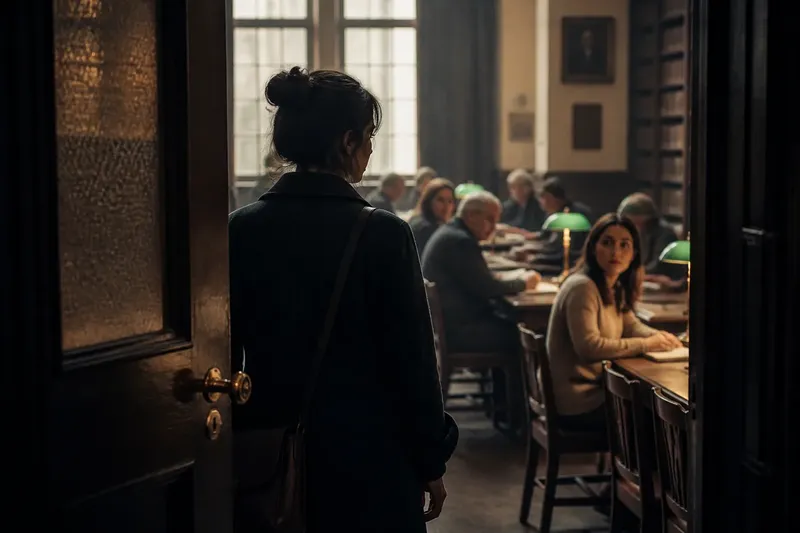
Imagine an invented opening in which a newcomer enters a library where everyone leaves one chair empty between strangers. The newcomer sits beside someone, and the nearby readers glance up. That small action would make the room’s social rule observable before anyone explains it; a later scene could then deepen, challenge, or ignore that rule.
What can an unanswered question do?
An opening question need not be a mystery about identity or danger. It can be a question of mood or conduct: Why is this person waiting? Why does the conversation stop when someone enters? Why is a familiar place framed as if it were unfamiliar?
Notice how much the film tells you alongside what it withholds. A question works when there is enough context to make you care, but enough uncertainty to keep your attention active. If you cannot yet name the question, describe the gap: “I know where they are, but not why nobody speaks.”
Do not force every odd detail into a clue. Some openings are designed to create atmosphere, not to plant evidence for a later explanation. The distinction often becomes clearer as the film reveals what it wants you to remember: a repeated gesture may gain weight, while a passing sound may remain a passing sound.
How can you read a film’s opening scene?
What should I notice before the dialogue explains things?
Check where the camera places you, what sounds are clear, and which objects or faces receive attention. These choices can set expectations even when the characters have not stated their aims.
Does every opening need a hook?
No. A film may begin with a routine, a landscape, or a pause, then make that ordinary material compelling through framing and rhythm. Ask what kind of patience the scene requests rather than whether it delivers a dramatic surprise.
How do I tell mood from a clue?
At first, you may not be able to tell. Record the detail neutrally, then see whether the film returns to it or makes it affect a choice; avoid assigning a definite meaning before the movie has given you grounds.
What if the opening feels disconnected from the rest?
Keep the opening’s tone and viewing instructions in mind, but do not assume every detail must be explained. A contrast can be deliberate, or the film may shift its approach; the later scenes give you a basis for judging that change.
What is not worth the effort?
It is rarely useful to pause after every shot and build a theory about what the director “must have meant.” That turns observation into a guessing contest and can pull you away from the scene’s immediate texture. A few accurate notes—sound, pace, space, and one unanswered question—are enough.
Also resist judging an opening only by how much story it supplies. Some films offer a clear orientation; others withhold names or causes while giving you a strong sense of place. Those are different contracts, not automatically better and worse versions of the same one.
What should you carry into the next scene?
Choose one concrete observation and watch whether the film develops it. If the opening made silence feel social, notice who speaks next and who gets to remain quiet. If it made a setting feel restrictive, see whether later characters move freely or adapt to its limits.
This is a useful way to appreciate a film’s opening scene without turning it into a compressed plot outline. It keeps your attention on what the movie asks you to notice, while leaving room for its choices to change meaning as you watch.
One last useful habit: when the credits begin, name the opening’s strongest instruction in plain language. “Listen for what people avoid saying” or “watch who controls the room” gives you a small, portable lens for the rest of the film, without pretending you already know where it will lead.