A Double Feature Built Around One Shared Setting
Plan a rainy-evening double feature around one shared setting, then compare how two films turn the same kind of place into different dramatic forces.
The usual rainy-evening mistake is choosing two films because they sound similar, then discovering they use that similarity in exactly the same way. A double feature built around one shared setting works better when the place connects the films but the story gives it a different job in each. You get a sharper comparison—and a reason to keep thinking about both movies after the credits.
For this plan, choose two films set in hotels, trains, islands, small towns, schools, or another recognizable environment. One might make the setting feel protective; the other might make it feel confining. The point is not to find a perfect match, but to notice how genre, character, and story shape what the place means.
What makes a shared setting a useful pairing?
A setting is more than a backdrop. It can restrict who meets, determine what characters can do, create a mood, or make ordinary behavior feel strange. When two films share a type of place, those functions become easier to compare because the setting gives you a common starting point.
Look for a setting with visible rules. A train has a route and a schedule; an island may limit escape; a school organizes people by roles and routines. These features give each film material to use, resist, or ignore. A vague similarity, such as both films having scenes indoors, will not give you much to discuss.
Then look for contrast in purpose. A hotel could be a temporary refuge in one film and a maze of surveillance in another. A small town could offer a character belonging, while a different story treats the same kind of community as a source of pressure. The contrast need not be a complete reversal; a shift in emphasis is enough.
How do you choose two films without spoiling the comparison?
Start with a setting rather than a plot twist. Think of places that naturally affect movement, privacy, or social contact: a waiting room, a ship, a remote house, a workplace, or a neighborhood. Pick one setting category, then find two films where it matters to the story rather than appearing only in passing.
For a rainy-evening pairing, choose films that are easy to access and comfortable to watch in one sitting with a short break. They do not need to match in release period, country, tone, or popularity. In fact, differences in style can help you see the setting’s role more clearly.
Before committing, check a synopsis or content note if you need to. Avoid reading detailed reviews that explain the story’s turns. You are trying to preserve the pleasure of discovering how each film uses its place, not eliminate all context. If one title is unfamiliar, a basic description can tell you whether the setting is central without giving away its development.
Make one simple pairing note: “Both films spend much of their story in a hotel, but one treats it as a place to hide and the other as a place that exposes people.” That sentence is a viewing hypothesis, not a verdict. Let the films revise it.
What should you do before the first film?
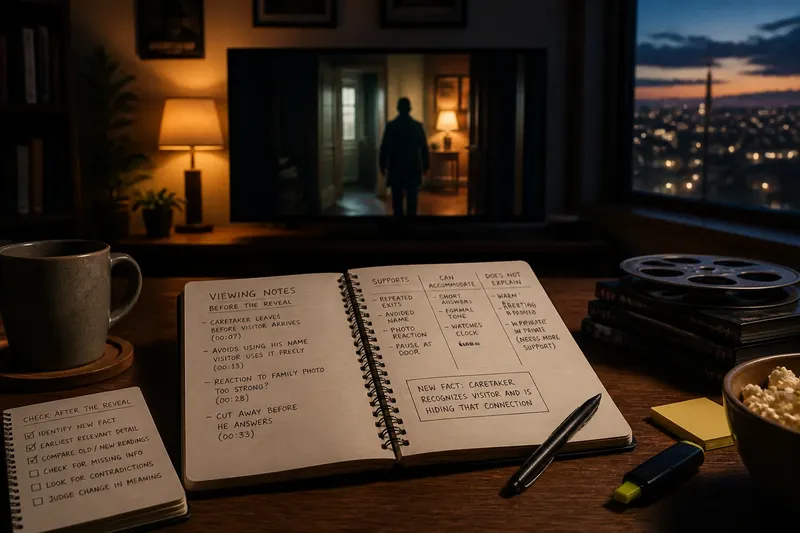
Set up the room for attention, not ceremony. Put your phone out of reach, prepare water or a snack, and decide on a break between films. If you are watching with someone else, agree that you can pause afterward before discussing; immediate verdicts can crowd out details you might otherwise remember.
Write down three prompts on paper or in a notes app:
- What practical rules does this place impose on the characters?
- Who seems comfortable here, and who does not?
- What changes in the setting’s mood as the story progresses?
Keep the prompts open. You are not hunting for a required answer or treating the film as a puzzle. They simply give your attention somewhere to land when the plot gets busy.
For the first film, watch for the setting’s introduction. Notice what the camera shows before you know the characters well: entrances, boundaries, shared spaces, views beyond the room, or signs of routine. Ask whether the place feels familiar, unfamiliar, welcoming, or difficult to read. Those first impressions give you something to compare later with the second film’s opening.
During the rest of the film, focus on a few moments when the setting affects a decision. A locked door, a crowded corridor, an unreliable route, or the presence of other people can alter what a character says or does. The important point is not to catalogue every prop. Track the moments when the place changes the available choices.
What belongs in the break between films?
Take a short pause long enough to reset your attention. Stretch, refill a drink, or open a window if the room feels stuffy. Avoid turning the interval into a full review session; the second film deserves a fresh response rather than being measured against a settled verdict on the first.
Jot down only a few observations while they are fresh. Note one image that made the setting memorable, one rule the place seemed to impose, and one character who changed how you felt about being there. If you are watching with someone, ask what they noticed before offering your own interpretation.
Do not search for explanations of the first film during the break. That is not worth the effort for this kind of viewing: outside commentary can replace your own memory with someone else’s vocabulary, and it may reveal details about the second title. A few imperfect notes are more useful than a pile of borrowed conclusions.
How should you watch the second film?
Use the same prompts, but do not demand the same answers. Pay attention to whether the place creates the same kind of pressure, offers similar comfort, or serves a different group of characters. If the second film has a markedly different genre or style, notice how that changes the setting’s effect.
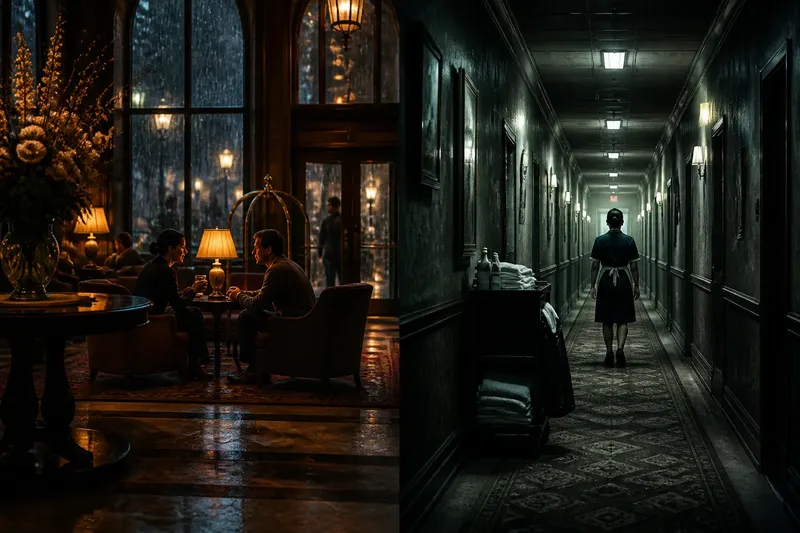
Imagine you choose two films centered on isolated hotels. In the first, a character arrives seeking privacy and gradually finds help from other guests; in the second, an employee knows every corridor but feels unable to leave. You might expect the buildings to feel alike, yet the first film could make shared spaces seem reassuring while the second makes familiar corridors feel like traps. That is an invented pairing, but it shows how character position can change the meaning of a shared setting.
Watch for the difference between what a place allows and what it symbolizes. A narrow hallway may physically limit movement, while its repeated appearance can also suggest that a character’s choices are closing in. A dining room may simply gather people, or it may make status and exclusion visible through who gets invited, served, or heard. Keep the physical and emotional effects distinct until the film gives you a reason to connect them.
Also notice who controls the setting. Is it owned, maintained, guarded, or governed by a character or institution? Does the film show workers and routines that keep the place functioning, or does it present the environment as if it exists only for the leads? Such choices can shift your sense of the setting from neutral space to a system with rules and beneficiaries.
What questions help compare the films afterward?
Did the same kind of place create different kinds of pressure?
Compare the choices the setting made difficult, not just the mood it created. One film may use limited space to force characters together, while another uses it to make avoidance impossible. The difference helps explain why a familiar environment can feel dramatically new.
Which character seemed to belong there?
Consider who knew the routines, understood the unspoken rules, or felt entitled to use the space. A character’s sense of belonging can shape the setting’s warmth or hostility even when the physical surroundings remain ordinary. Ask whether that comfort changes over the course of the story.
How did the genre change your expectations of the setting?
A comedy, mystery, romance, or thriller can direct attention toward different features of the same environment. A shared room might create awkward encounters in one film and hide evidence in another. Compare what you expected the place to do with what the story actually asked it to do.
What image from each film best captures its setting?
Choose one moment or visual detail from each title and explain why it stands out. You might recall a doorway held open, a view cut off by weather, or a crowded public space where one person remains isolated. Comparing two specific images keeps the conversation grounded in the films rather than in broad labels.
How can you shape the rest of the week around the double feature?
The viewing itself can happen on one rainy evening; the reflection can take a few small moments across the following days. The next morning, reread your notes and add one sentence about which film made the setting feel more active in the story. Do not decide which film is “better” unless that is genuinely the question you want to answer.
Later in the week, revisit one scene from each film if you have access to them. Choose scenes that show the setting changing a character’s options, not simply the most striking images. Ask whether the scene depends on the specific place or could happen almost anywhere. If it could happen anywhere, consider whether the film uses the setting mainly for atmosphere; if not, identify what the location contributes.
If another viewer joined you, compare notes without trying to settle every disagreement. One person may read a crowded room as lively, while another sees it as intrusive. Ask which moment led to each reading. The difference can reveal how performance, framing, sound, and personal expectations work together.
For a future pairing, keep the same setting category and change the contrast. If your hotel films both made the setting feel threatening, look for a story that treats a hotel as a place of temporary freedom. If the setting seemed to control everyone, try one where a character reshapes its rules. You do not need a formal rating system; a clear shared place and a meaningful difference are enough.
A double feature built around one shared setting is most rewarding when the comparison stays specific. Name the room, route, boundary, or routine that affected the story, then say what each film made it do. That practice turns a rainy-evening pairing into a useful way to notice how movies make place part of character and conflict.