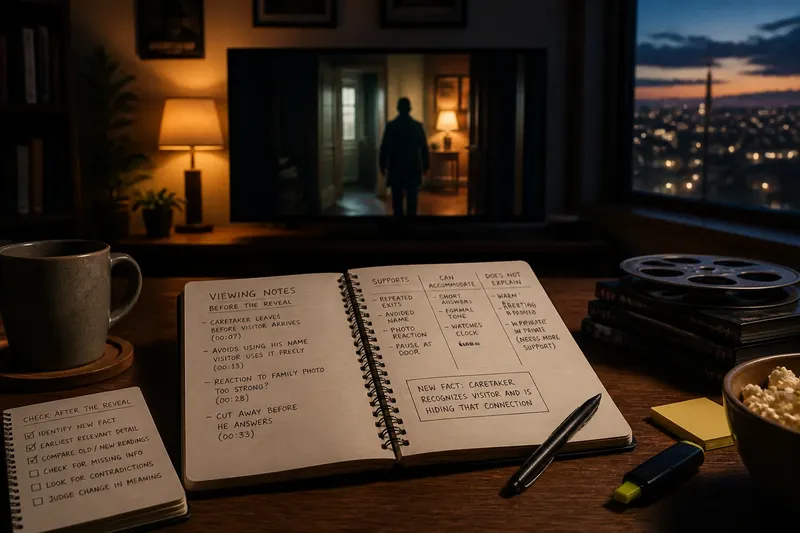
The Chosen-One Story Is Not a Character Arc
The chosen-one story is not a character arc: learn to separate a hero’s special role from the choices that actually change who they are.

The most common mistake in a chosen-one story is treating the prophecy, birthmark, or secret lineage as proof that the hero has changed. That shortcut blurs two different questions: why this person matters to the plot, and what this person learns to do differently. The chosen-one story is not a character arc; the role gives a character a place in the conflict, while an arc comes from decisions that reshape how they meet it.
That distinction makes familiar fantasy and science-fiction plots easier to read. A character can be selected, trained, and crowned without becoming more mature. Another can begin as an ordinary outsider and change profoundly while the story’s magical system barely notices. Watch the character’s choices, not only the world’s declarations about them.
What does a chosen role actually do?
A chosen role is a plot position. A prophecy may identify someone as the only person able to confront a threat; a family history may connect them to a throne; a mystical object may respond to their presence. These devices explain why the story centers on this character and give other characters a reason to recruit, fear, protect, or oppose them.
The role can also create pressure. A hero expected to save a community may face an impossible burden, while an heir may be pushed toward power they never wanted. But pressure is not itself transformation. It becomes part of an arc when the character responds in a way that exposes or changes their values.
Think of the role as a question the plot asks: What will this person do with the importance others assign to them? The answer may be to accept, reject, reinterpret, or exploit that importance. Each option can lead to an arc, but none counts as one automatically.
How can you tell whether a character has changed?
Compare the character’s choices at the beginning and the end, especially when both moments put a similar value under strain. A character who initially abandons a companion to protect their own position might later risk that position to help someone else. The change is visible in the decision and its cost, not in a title bestowed afterward.
Look for a shift in the character’s assumptions, habits, or priorities. They may learn to trust another person, stop confusing obedience with responsibility, or recognize that victory without compassion is hollow. The story does not need to spell out the lesson in dialogue; a changed action can make it clear.
Change need not mean becoming kinder or wiser. A character can grow more ruthless after deciding that fear is a more reliable tool than persuasion. That is an arc too, provided the film traces how the character arrives at the decision and shows its effects on later behavior.
Does accepting a destiny count as growth?
It can, but acceptance alone does not settle the question. If a reluctant hero simply stops complaining because the plot needs them to proceed, the role has changed their schedule, not necessarily their outlook. If they examine what the calling demands, decide which parts they can support, and accept responsibility on their own terms, the decision may mark meaningful change.
Pay attention to what the character gives up or revises. Do they choose the mission because they care about the people at risk, because they want recognition, or because refusal has become frightening? A film can offer the same outward action—a hero steps forward—while giving it very different emotional meaning.
Imagine a village messenger who has been told that an old prophecy names them as its defender. At first, they accept the duty only because the village elders threaten to exile their family; later, when escape becomes possible, they return to protect a rival who once mistreated them. The prophecy remains unchanged, but the messenger’s reason for acting has shifted from coercion to a freely chosen sense of responsibility.
What should you watch for in a chosen-one arc?
Rather than treating every ceremonial moment as character development, track how the hero responds to pressure. These questions help separate plot recognition from personal change:
- What does the character want before the role is revealed? A private goal gives you a baseline for noticing later changes.
- What does the role demand that conflicts with that goal? The conflict shows where the character’s values face a real test.
- Which choice carries a cost? A decision that risks comfort, status, safety, or a relationship often makes the character’s priorities legible.
- Does the character repeat an old response or try a new one? A changed response can show learning; a repeated one may show that the character remains stuck.
- What changes in the character’s relationships? Trust, distance, resentment, or shared responsibility can reveal consequences that a grand title cannot.
- Could the final decision still matter without the prophecy? If it would, the arc rests on the character’s agency as well as the plot’s special designation.
How do supporting characters clarify the difference?
Supporting characters often show what the hero’s role means to other people. A mentor may treat the prophecy as a command, while a friend sees a frightened person who needs room to refuse. Their disagreement can expose the difference between being useful to a cause and choosing to serve it.
They can also serve as contrasts. One character may accept a sacred duty without question, while another asks who benefits from the tradition. If the chosen hero begins by copying the first person and later adopts the second person’s skepticism, the surrounding characters help make that change visible.
Still, do not mistake another person’s opinion for the hero’s arc. A companion declaring that the hero has become brave is not enough if the hero’s behavior has not changed. Treat such dialogue as a claim to check against the scenes that follow.
When does the special role overpower the character?
The role can swallow the person when the story treats status as a substitute for decisions. If every ally follows the hero because of a prophecy, and every victory arrives because the hero has a unique gift, the character may have little influence over how events unfold. The plot can feel grand while the central figure remains passive.
A related problem appears when competence is mistaken for growth. Training may make a hero better at using a weapon or controlling a power, but skill is not automatically a change in values. Ask what the new ability lets the character choose, and whether they use it differently as their understanding develops.
It is also possible for a film to make the chosen role itself the source of a strong arc. A hero might move from wanting to be special to recognizing the harm caused by that desire, or from resenting a public burden to setting limits on how others may define them. The distinction is not between destiny and no destiny; it is between a role imposed by the plot and a response shaped by the character.
Can a character arc end with refusing the role?
Yes. Refusal can complete an arc when it follows a meaningful reconsideration. A character who once chased status might reject a crown after seeing what its pursuit costs others. Or someone who initially feared responsibility might decline a particular office while still choosing to protect the people who need help.
That ending is more convincing when the film lets the choice have consequences. Other characters may be disappointed, the conflict may remain difficult, or the hero may have to find another way to contribute. If refusal simply removes the central problem without requiring a decision, it may function as a plot exit rather than a change in character.
The useful distinction is simple: a chosen-one story tells you why the plot singles someone out; a character arc shows what that person does with the burden, opportunity, or expectation. When you watch for that difference, a prophecy becomes a pressure point rather than a shortcut to depth—and the chosen-one story is not a character arc unless the person’s choices make it one.